


Finger Lakes Chamber Music
Festival
10th Anniversary Grand Finale w/Manhattan Chamber Orchestra
Saturday, August 4
PennYanAcademy, 1
School Drive, Penn Yan
7:30 p.m. | $20 (students free) |
315-536-0383, FingerLakes-Music.org
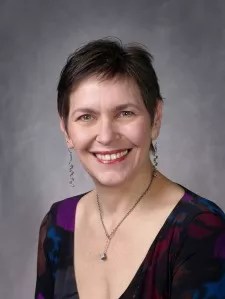
“It’s their 10th anniversary, and Richard decided that we’re going to cut
loose,” says Julia Figueras about her upcoming performance with the Finger
Lakes Chamber Music Festival. The music
director and mid-day host at WXXI will be part of the grand finale concert of
the festival’s 2012 season, which will feature the Manhattan Chamber Orchestra
under the baton of festival artistic director Richard Auldon Clark. The program
will include Stravinsky’s “A Soldier’s Tale” and William Walton’s “Façade” with
poetry of Edith Sitwell, ready by Figueras.
Figueras says that, 20 years ago, she probably wouldn’t have liked the
Walton/Sitwell piece because it was “too cacophonous.” After “threatening to do
it for a while,” Figueras says, Clark told her it was
time. So Figueras went to her father’s house and, brought up the
LP, and listened to the work again. This time, she was absolutely hooked.
“‘Façade’ is a pretty riotous piece,” says Figueras. “It’s verbal
tintinnabulation. The words match the sound of the music.”
“Façade” is a work for musicians with poetic verse. The
music was composed by Sir William Walton (1902-1983) and the poetry by Edith
Sitwell (1887-1964). Both Britons, Walton found himself at the home of Sitwell
toward the end of his studies at Oxford,
and “Façade” was their first collaboration. Figueras says that Sitwell came
from a very well-educated family, and that her house was a center for the arts
and artists. Sitwell reflected the times, particularly in England,
between world wars, and that she was known not only for her poetry, but also
for her exotic costumes.
“Façade” debuted in 1923, with Walton at the podium and Sitwell projecting
the verse through a Sengerphone (megaphone) poked through a hole in the curtain
that was painted to depict a face. According to Figueras, “the public was a
little baffled by it.”
“It’s a crazy piece,” says Figueras. “I actually own one of the
old-fashioned megaphones and I’m threatening to bring it.”
As to whether Figueras will bring a modern relevance to the piece, she was
clear in her philosophical approach. “I try not to bring a modern relevance to
a piece. I think great art has a relevance of its own,” she says. “It was a
piece of music that was written at a particular period of time, and it is what
it is.”
Figueras describes the piece as a vocal challenge, but she
revels in delivering the spoken word with live music. Her performance credits
include the Rochester Philharmonic Youth Symphony Orchestra, the Penfield
Symphony Orchestra, Ad Hoc, and the Canandaigua LakeMusic
Festival.
Indeed, Figueras’ voice is her instrument, and she is widely known for her
work as a host on WXXI’s classical radio station at 91.5 FM. She has
interviewed Clark for the station and featured the
Manhattan Chamber Orchestra on the show “Back Stage Pass.”
“It’s extraordinary to be sitting in that place where all the energy meets,”
says Figueras of being a part of a live orchestral performance. “There’s a
place where the energy of the orchestra is coming to my back and the energy of
the audience is coming to my face. Somewhere in the midst of that is this
rarified space.”
For Figueras, reading for “Façade” is “a real treat. It’s on my bucket list
of things I’d like to do with an orchestra. It’s not going to come around
often, so it’s a real treat also for the audience to have it performed by
professional musicians.”
Clark founded the Finger
Lakes Chamber Music
Festival 10 years ago, and performances principally include the Manhattan
Chamber Orchestra, which he founded in 1987. The Manhattan Chamber Orchestra
has performed at all the premier New York City
venues, including Carnegie Hall, LincolnCenter, Alice Tully Hall, Symphony
Space, and even the United Nations. Clark’s connection
to the Upstate New York region stems from his upbringing in Apalachin (west of Binghamton).
The festival is a series of concerts held throughout the Penn Yan region
over a period of weeks. This year’s festival concerts took place at the Glenn
H. Curtiss Aviation Museum (Hammondsport), Hunt Country Vineyards (Branchport),
the lawn of a historic county courthouse (Penn Yan), the Norton Chapel (Keuka
College, Keuka Park), and Penn Yan Academy.
Figueras applauds Clark for his programming, which
includes a core repertoire that is largely of American composers, as well as
“non-core repertoire.”
“Music is a living, breathing thing that
has to move forward,” says Figueras. “Sometimes that means playing new music.
Sometimes that means playing music that is not new, but which remains novel. An
audience is far more willing to go further with you than is thought, especially
in a live setting, as opposed to a radio setting. [Clark]
does a really nice job of performing interesting repertoire in lovely venues
with a mix of artistic greatness.”
This article appears in Aug 1-7, 2012.





