


Gaylord
Tsunami
Jeffcore
Records
Gaylord
founders Jeff Steverson and Corey Adams managed to
invent their own musical language while still wearing influences like Big Hair,
Primus, Mr. Bungle, and Rush on their sleeve. Their work, a raucous blend of prog, metal, and funk with heavy traces of classical,
continues to elicit a fanatic response from audiences nearly 10 years into
Gaylord’s history.
Recorded
shortly after a three-year hiatus, this EP sees the local trio continuing to
work with the trademark structural complexity — something it seemed they had
taken as far as possible before disbanding. Here, however, the band wisely
tempers its approach by introducing some repetition. While much of the material
shifts in style and tempo almost compulsively (as usual), many of the songs
gravitate around and return to central motifs, which suggests that the band
isn’t simply stitching together parts and quite possibly stands at the cusp of
a grand new vision that’s more cohesive than anything it has offered to date.
—
Saby Reyes-Kulkarni

Morningwood
Morningwood
Capitol
Morningwood
describes its music as “a monster truck having sex with a Bond girl.” Yup.There’s big rock riffs.
There’s cheeky sophistication. And there’s plenty of humor. This New York City foursome’s self-titled debut (produced by Gil Norton of
Echo & TheBunnymen and
Pixies) is shake-your-booty-pop-rock music. Singer Chantal Claret is a
23-year-old smartass (just check out the tune “Babysit”
where she coyly seduces her young charge) with killer pipes and an amazing
sense of melody.
With
members coming from the ranks of CiboMatto, Spacehog, and The
Wallflowers, the band rocks glam, trashy, new wavy, classic, and fun. This is
one of those great records that can bridge the gap between certain jaded music
critics and their pre-teen nieces.
—
Frank De Blase

Heavy Trash
Heavy Trash
Yep
Roc
Jon
Spencer’s reverent and antagonistic take manages to breathe life into rock ‘n’
roll’s bloated black leather corpse and get it to dance. The music he has
created in projects like Pussy Galore, The John Spencer Blues Explosion, Boss
Hog, and various outings with unsung legends like the late R.L. Burnside have
always burned hot and bled raw. Spencer never seems to over-think it or horse
it into the boat.
Combining
talents with producer and Speedball Baby guitarist Matt Verta-Ray,
Spencer once again destroys in order to build an even cooler monster. Verta-Ray’s slick twang adds a little lonesome to the grit
and tones down Spencer’s mania a bit. This debut disc almost sounds like a demo
in all its ragged glory. There are lo-fi studio
stunts, Spencer and Verta-Ray play virtually all the
instruments, and we get a batch of 13 greasy nuggets ranging from blues-boogie
to rockabilly to the r&b freak-outs we all need.
—
Frank De Blase
BCT
The Life and Times of Steven Character
Yawn
Factory
The
latest from local metal guitarist Erik Burke actually consists of 16 new songs
compiled with three previous albums. That’s 77 tracks (and almost as many silly
interludes, crammed into 64 minutes!) about weed, getting stoned, dismembering
people, weed, “burning villages and raping women,” midget tossing, wanting to
BE a midget, weed, why old people suck, weed, and more weed. Did we mention
weed?
If
Jeff Spicoli had an evil twin, it would be Burke, who
nonetheless fulfills his social responsibility by starting this album with an
instructional bit on bong-smoking. Given his resume (Sulaco,
Lethargy, Nuclear Assault, Mungbeandemon, Kalibas, etc.), you might dismiss
BCT as a goofy dalliance where he plays all the instruments. Think again — Steven Character exhibits Burke’s sick
drum chops and sophisticated mind for structure even in songs that last 45
seconds. Though overloaded with cliquey inside humor, this material amply
demonstrates why Burke is considered a creative force to be reckoned with in
the metal underground.
—
Saby Reyes-Kulkarni
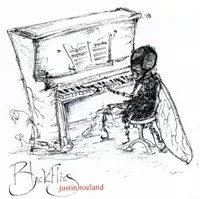
Justin Roeland
Black Flies
self-released
Comparisons
to Jeff Buckley and Chris Whitley shouldn’t be made lightly, but they’re no
longer a stretch for local singer-songwriter-guitarist Justin Roeland, who unveils a masterpiece in the wake of his
recent relocation to the California shore. As guitarist and principalsongwriter in the
meat-and-potatoes rock band Pompous Pilate, Roeland
demonstrated an uncanny ability to take well-worn classic influences like Pearl
Jam, U2, and The Police to new places. He also showed a blossoming ear for
mixing and production.
Clearly,
Roeland had a vision, but nothing could have
foreshadowed the quantum leap he takes with Black
Flies, which he played, recorded, and mixed entirely on his own. Conceived
largely when Roeland was just emerging from sleep, Black Flies conveys atmosphere and
texture so masterfully and distinctly that it indeed sounds like something from
another world. It will attach itself to your memories, haunt them, and trigger
new ones all its own.
—
Saby Reyes-Kulkarni

Shooter Jennings
Electric Rodeo
Universal
South
Fresh
off his stint portraying daddy Waylon in the Oscar-nominated Walk the Line, along comes Shooter
Jennings with his sophomore record, Electric
Rodeo. The follow-up to Put the ‘O’
Back in Country (wait for it… ) picks up where the debut album left off,
but resist the urge to saddle him with the oft-misused alt-country label. Jennings makes beer-swilling, girl-screwing southern rock as if
George Jones were a long-lost Allman Brother drafted
to front LynyrdSkynyrd.
Rodeo features
cocky stomps like “Manifesto No. 2” that glorify an outlaw way of life, followed
by the inevitable slow-dance apology for impulses a good ol’
boy just can’t control (“Aviators”). It ain’t
terribly innovative, but country has never had to be. As long as there’s a
little honky-tonk piano, the occasional fiddle, and some mournful pedal steel
alternating with balls-out guitar, it works.
—
Dayna Papaleo
This article appears in Feb 8-14, 2006.





