


Melissa Nicholson had a bachelor’s and a master’s degree in education, and zero job prospects.
“I discovered I couldn’t get a job just being certified to teach elementary school,” she says. “But I thought, ‘Even though I’m swamped in loans already, there’s no way I can turn back now that I’ve come this far.'”
Nicholson, who wants to teach in the Rochester City School District, went on to earn a post-graduate certification to teach English as a second language. Though her ESL certification has made her more marketable, she says, she still hasn’t landed a permanent teaching job.
Nicholson now owes about $80,000 in student loans, and will soon be faced with a $600 monthly payment. For now, she’s surviving on what she makes as a substitute teacher, and she estimates she could be 61 before she pays off her student debt.
It’s not hard to find people — some still in college and recent graduates — with $20,000 to $100,000 in student loans. All it takes is a query over Twitter or Facebook, and the responses from the financially weary appear with startling speed.
Some economists call student debt the next economic crisis, warning that the bubble may be about to burst. The Federal Reserve Bank of New York reports that unpaid debt on student loans is about $902 billion, but the Consumer Finance Protection Bureau says it tops $1 trillion.
Some college administrators and financial aid officers say the problem of student debt is vastly overstated, but many students, parents, and educators strongly disagree. Some students and former students say their debt is so high that even if they are fortunate enough to get a job in this sluggish economy, they will still have to postpone major life decisions like marriage and having children.
Others say their debt is unsustainable, and question whether they’ll ever be able to pay it off. As of 2012, more than 850,000 student loans were in default.

Deb Schleede graduated from the Rochester Institute of Technology last year with an undergraduate degree in journalism and nearly $80,000 in student loans.
“I completely exhausted federal and state aid,” she says. “Because I had a single mom, I did get what I consider a very decent amount of aid. But RIT is expensive and it didn’t cover all of it.”
Though Schleede hasn’t been able to find a job in journalism, she does work full time in retail. She says she tries not to think about her debt because it overwhelms her.
“One of my loans is $516 a month, and when you add them all together, it’s more than I make in one pay period,” she says. “I would have to be making more than $60,000 a year to make the payments comfortably.”
The student loan crisis raises many questions: What are the implications of all this debt on the US economy? How can these young people ever hope to purchase big-ticket items like houses and cars? Is the debt fair? The nonprofit Center for American Progress reports that 81 percent of African-American students and 61 percent of Latino students who earned bachelor’s degrees last year graduated with debt.
And most important: the cost of tuition at four-year public and private colleges, according to CFAP, has increased by more than 1,000 percent over the last three decades, putting the rising cost of higher education on par with the rising cost of health care. Is it good policy in a global economy to have the cost of a college education outpace the rate of inflation? Most economists shudder at the thought.
Some economists, however, say it’s OK for students to have some debt — it gives them skin in the game. And higher education should be left to the forces of the free market, they say. The problem with that argument is that the playing field isn’t level. Students can defer their debt, but student loans are among the few debts in the US that can’t be discharged through bankruptcy.
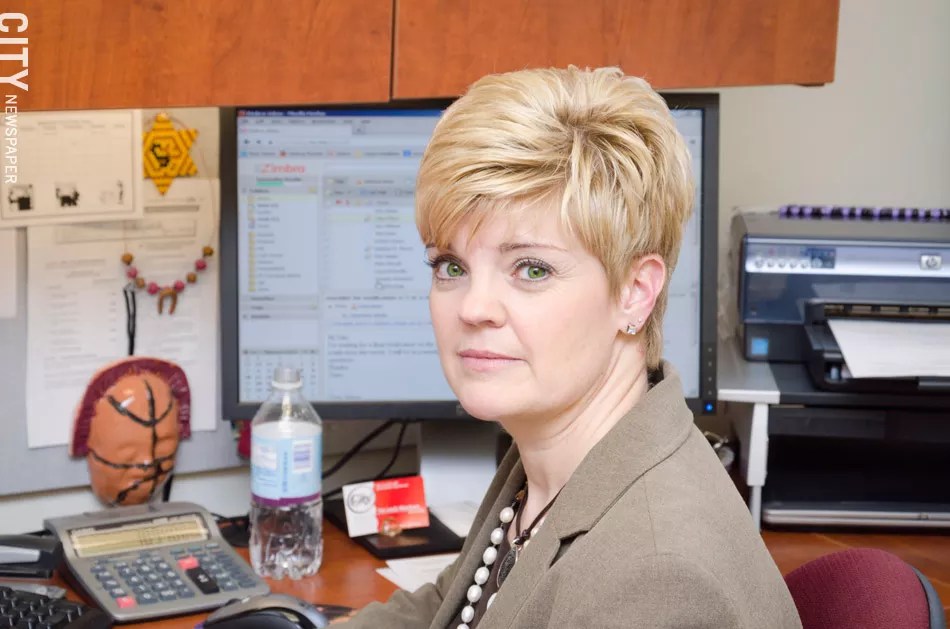
Administrators and financial aid officers at some institutions have their own view of the student debt problem. Jonathan Burdick, dean of admissions and financial aid at the University of Rochester, says about 50 percent of the UR’s students are from families who can afford to pay for their children’s education.
Every college has some percentage of students who don’t have to borrow, Burdick says. Otherwise, financing college requires navigating a maze of federal and state loans, private lender loans, grants, and scholarships. The search for aid typically begins with filing a Federal Application for Student Aid, or the FAFSA form. Most institutions’ websites will direct applicants to the form.
UR students and parents who need financial assistance may receive some help from the UR, but Burdick says they may also be expected to borrow money.
“There’s a share of students marching through here who can expect to graduate owing $30,000 to the federal government,” Burdick says. “Any other borrowing above that amount by our definition is an elected choice.”
And for a degree from the UR, he says, some debt is not excessive.
Burdick cites a lack of financial discipline on the part of some students and parents as one of the main problems. And he says the basic financial aid calculations that institutions use hasn’t changed much in 40 years.
“A family with an income of $100,000 with two children, and one of them in college, can typically afford to spend $20,000 to $25,000 [annually] on college expenses,” he says. “It’s not comfortable, but it’s doable. It’s definitely not the time to go out and buy a house.”
But some parents are assuming debt and not making the sacrifices necessary to pay their portion of the bill, Burdick says.
“It’s the same category of debt from a moral standpoint as credit card debt,” he says. “You’re choosing not to change your lifestyle at all, but you’re assuming a pretty heavy level of extra debt responsibility toward college.”
Burdick says he’s worried that some discretionary debt is being lumped with college-related debt.
“Somewhere in there somebody is making a choice,” he says. “I’m sympathetic and all because of the recession, but the choices being made seem to have changed a bit.”
Samantha Veeder, director of financial aid at Nazareth College, agrees. During the more than 20 years she has worked in financial aid, she says she’s watched the public’s attitude toward debt change.
“People respond to debt differently,” she says. “If a student takes the maximum in federal loans — about $27,000 — the monthly payment is going to be about $300 a month for 10 years. If you can receive a good four-year education at or under $30,000, you’ve done well; you’ve made an excellent investment in yourself and your career. Some parents won’t even blink an eye at $30,000, and others will say, ‘Absolutely not. You are not coming out of college $30,000 in debt.'”
And Veeder cites another problem: many children and parents are not financially literate.
“I say this with my own child in mind: kids don’t understand money,” she says. “They don’t know how to balance a checkbook. They don’t know how to open a bank account. They only know how to spend.”
Like many higher ed institutions, Nazareth is putting more emphasis on educating students about their loan commitments. But Veeder says it’s still a challenge.
“Generally speaking, especially with freshmen and sophomores, they’re not listening,” she says. “They’ll sign whatever they have to sign: ‘just give me the loan.'”
But for those students and parents who are financially savvy, Veeder says she’s seeing a reaction that’s relatively new.
“This generation of parents wants to know the outcome,” she says. “‘What’s the return on investment? If my child goes $30,000 into debt, is he going to get a job?'”
The high cost of college may be causing some students to reassess the purpose of education and the value of a bachelor’s degree. Should they go to college to develop critical thinking and innovation, or to train for a job? Should they pursue what they most enjoy or be more pragmatic?
And should college administrators be expected to justify their tuitions with some quantification of how many of their graduates are employed in their chosen fields?
This is where the financial piece between students and school administrators gets a little sketchy. With an economy struggling to emerge from one of the country’s worst recessions, the job market is especially chilly for recent graduates.
A lot depends on the fields students choose, Veeder says. A student leaving Nazareth with a graduate degree in physical therapy, for example, is much more likely to find employment sooner and at a higher starting salary than a teacher at this time, she says.
“I have friends who have degrees, but they’re working two and three jobs to pay for it,” says recent graduate Deb Schleede. “Some are thinking of going back to college to get a master’s. I’m very honest with them about the situation I’m in, and I caution them to think about the finances involved with it, and make sure they understand they’re not going to get rid of their debt easily.”

It’s difficult to gauge how much financial or career counseling students receive or how much they need, since every student is different. Amanda Ott went to cosmetology school and still owes the $10,000 she borrowed to become a hairdresser. She works full time in a shop near RIT and says she’s on track to earn her bachelor’s degree in education at SUNY Brockport in 2015.
Ott figures she owes about $30,000, and says she doesn’t remember receiving financial or career counseling.
“I think if I had received it, I would have gone to a community college for two years first,” she says. “The debt becomes a means to an end, and you’re not really considering the implications of the debt at the time.”
Substitute teacher Melissa Nicholson says she never sat down and calculated what she would make as a teacher and how she would repay her loans and have enough money to live on.
“I didn’t look at what I would be making, and here’s what would go toward groceries, car, and rent,” Nicholson says.
She says she followed the conventional advice given to young people: go to college and pursue your passion. She says she knew teaching isn’t a high-paying career, but it wasn’t until she was already in debt that she learned more about the field. And while changing direction is possible, it often requires going further into debt.
“It’s [debt] sort of the challenge of my generation,” Nicholson says. “Unless you want to be a pharmacist or a nuclear engineer or one of these other high-paid professionals, it’s not a good situation. But I don’t know what the alternative is. Among people my age, you just assume there is debt. I feel like my whole generation is drowning in debt.”

Ballooning student debt has put some college officials on the defensive. Though administrators say that the number of non-medical students with excessively high debt is still small, the issue is shining a spotlight on the staggering cost of a college education.
And the question that nearly everyone asks: Why is it so high?
“The inflation factor is huge,” says the UR’s Burdick. “But we’re now operating in a global environment, and this is a research university. If we’re not willing to pay $300,000 a year for a superstar economist or a million dollars for a leading scientist, some other university is.”
And much of a university’s expenses are fixed, he says.
“There’s no way we can get the benefits of a Ford [Motor Company] that could ship 80 percent of its manufacturing to some low-wage place,” he says. “We’re a services business and just about all of those services are performed right here.”
Amit Batabyal, a professor of economics at RIT, says that advances in technology don’t always translate to significant cost savings in higher education.
“You still require dormitories and you still require lecture rooms,” he says.
The problem is exacerbated by parents’ and students’ high expectations of the college experience, he says.
RIT is making an effort to keep tuition increases down through internal cost-savings and efficiencies, Batabyal says, and he predicts that online education will transform higher education.
“A student, let’s say, in Pakistan can take a course by Amit at RIT,” he says. “This is the wave of the future.”
Batabyal says Americans have put all students on one track that leads to college. While it’s true that higher education leads to better paying jobs and more stable employment, it’s also true that the US has failed to give students more vocational school options, he says.
Germany has been able to maintain a sizeable manufacturing base that provides workers with a reasonable income, Batabyal says.
“In Germany, a significant number of kids don’t go to college, but Germany has a number of vocational schools,” he says. “That as a society is something we’ve failed to do.”
But Batabyal is most concerned with federal and state spending priorities that have recently confronted an anti-tax culture.
“Higher education is being tested in ways that it hasn’t before,” he says. “Cash-strapped states are whittling down their support for student aid. This increases reliance on debt. State governments are going to have to decide if it makes sense to decrease their support for education and increase their investment in things like prisons. It’s a very lopsided investment.”
The result is higher education that’s increasingly unaffordable to many Americans, Batabyal says, which drives unemployment and underemployment.
This article appears in Feb 13-19, 2013.






I do not understand why someone would pay $80,000 to RIT for a degree in journalism. A little research, which some one interested in that field should find easy to do, would clearly show that a) there are very few jobs in that field, and b)those jobs are unlikely to go to an RIT grad when there are so many highly regarded j-schools in the nation already producing too many grads for the job market. RIT is a TECHNICAL school, fer cryin’ out loud.
I am substitute teacher, so I can empathize with the struggle that Ms. Nicholson faces. While I do not see it as crippling, the debt load I carry from undergrad and masters level education is about $75,000. My family has made a fair amount of avant-garde choices in order to make those payments work and still have a lower middle class lifestyle. But when I show our numbers to friends, they are shocked we live on so little. And we do so because of student loan debt… the only debt we have.
Here’s the real mystery to me: In order to be a teacher in NY state (or most other states for that matter), a student is required to earn their bachelors degree and then a masters degree within 5 years. So, presumably, by age 26 or so, a teacher in NY state will have managed a minimum of 6 years of higher education. And that’s just to earn the certification. That does not earn the student a job. Often you have to choose a more prestigious school, or take on additional schooling, to stand out. Both options cost more money. How is it that the required schooling needed to earn certification and stand out in the flooded job market costs almost double the starting pay for the teaching position one is training for?
That game is not the fault of those who choose that line of work. One doesn’t become a teacher because it’s a cash-cow. But shouldn’t there be some parity between the investment and the return? I’m not perscribing an answer or even pointing a finger… I’m more noticing that, based on a simple cost/benefit analysis, the cost of education for future educators makes the profession a poor investment. Seems ironic… especially in a climate where we are banging our fists on tables about wanting highly-qualified and competent teachers… and how education is the backbone of an informed citizenry.
Ps. I am also keenly aware of my typo in the first sentence. Didn’t notice it until my edit-time ran out!
Higher education is a financial gamble and some major/school/job market combinations are losers. Perhaps it shouldn’t be that way, but it is. Every article of this type I’ve read contains a profile of a student who majored in a liberal arts field from a high priced private school. The Veeder and Burdick quotes in the middle of this article nailed it. Personal financial responsibility.
The example of the journalism student with the $80k in loans is a good example of what happens when people have unrealistic expectations of their career choice. In a time when CNN no longer has an office of investigative journalism, and most ‘news’ sources are relying more and more on opinions, unpaid bloggers and pundits making money from the books they sell on the side, there is essentially no ‘profession’ left in that field worth pursuing. Perhaps she’ll find a job at the Podunk Chronicle for $1/word, but I doubt that she’ll find much more than that! Not today, not in the USA. At some point, you would THINK that a financial aid counsellor would tell her to face reality, and choose a degree that has at least some potential. As bad as her case is, it’s hardly the worst I’ve heard. I was reading a story once about a man who owes $120k for his culinary college education, and all he could find in his field was a job as a line cook at a chain restaurant, for $10/hour. I managed to graduate more than a decade ago, with an engineering degree and $25k in loans, and even in my field, there are few jobs that pay more than squat.
BTW, as far as the teaching student is concerned; there are PLENTY of jobs in the field. You just need to make a commitment for something like 5 years, and teach in rural schools, mostly on Native American reservations. And, they’ll pay for at least some of your loans.
I believe there are too many people going to college for the sake of going to college. Many of them are not learning any tangible skills like engineering or medicine. What we end up with is a crop of graduates with degrees in sociology, film studies, women’s studies, anthropology, and political science. They’re great at critical thinking, but can’t begin to offer employers a useful skill set on the job.
I used to sympathize with the current Millenials re this issue but then I realized that there is no reason to; unlike my Gen X generation, Millenials have loads of info abt damn near anything at their fingertips via the Internet. Back in the ol’ public library days, if you lived in Doorknob like I did, there were precious few info resources even at a local library that discussed things like avg earnings for fields, etc. Now, a Millenial has 0 excuse for not going in with open eyes. If a recent HS grad goes $100k into debt for a degree in basket-weaving, that’s their problem– and their debt. Don’t start talking abt how we need to “forgive” these loans or do anything else. You made your bed, now sleep in it– just like the rest of us have had to.
Oh yeah, and if you expect honest “guidance” from college admission counsellors– really, what are you thinking? I can understand a naiive HS grad getting hornswaggled, but their loan-co-signing parents? Come on! If you can get the loan money for a Mercedes but make only $20k/yr, do you expect the car salesman to try to talk you into a cheaper model or not get the car at all? Colleges are businesses, and not just businesses, but hugely-gov’t-subsidized ones (i.e., we the taxpayers are subsidizing them). Want to see college tuition costs drop? Reduce/remove the gov’t-guaranteed loans and you’d see ppl getting a lot more practical real fast abt where and for what they go to college or which one they send their kid off to.
“Higher education” has become a racket. People running colleges have zero interest in seeing you graduate with a marketable skill-set or even a valud degree (cheating is rife on campuses all over the country and little real effort is put forth to stop it– but collect donations? There’s no end of effort there!). All they want is your money.
Never expect someone to betray their own income stream. Want to pay $150k for a worthless English degree? No problem! Sure, reading Proust might make you more “interesting” at certain kinds of snooty parties, but unless you can make a living off attending said parties and expounding on Proust, fuggedaboutit, as they say in the old neighborhood. Being “interesting” plus $5 will get you a cup of coffee at Starbucks.
Now, if you can open a business as successful as Starbucks… now you’re *really* interesting…
I am so happy to read these comments and realize that some people do indeed get it. The simple fact of the matter is if you graduate in the bottom 25% of a computer science or engineering program, you can STILL find a decent job after college. Unless you are the best french art historian, a degree in french art history isn’t gonna make you any money. And guess what? The tuition for engineering and french art history is the same!
Yes people should do and study what they love, but they should also be practical!
Here are some solutions to the student loan crisis, but first, understand the cause, limitless risk-free lending that fuels tuition inflation. So, end government backing and let the banks carry the risk. Second, ease the bankruptcy law. Currently one must be homeless, terminally ill, and have a history of payment in order to get a discharge. Third, take the government money that is currently used for the guarantee and spend that money directly on public colleges so that tuition can be as low as possible, if not free,as CUNY was long ago. Thus competition from public schools will pressure private schools to keep tuition low. Until then, urge the young to get practical educations at the Community and SUNY colleges.
As a U of R grad (undergrad and master’s in teaching) and a Rochester City School District teacher, I am disgusted by Dean Jonathan Burdick’s callousness towards the crippling effects of the financial crisis on American poor and working families. In a time of stagnant wages, mortgage meltdowns, widespread un- and under-employment, and looming government cutbacks, Dean Burdick, and by extension, the U of R leadership, have declared themselves firmly on the side of Wall Street and the 1%. Too many colleges and universities hike tuition and fees every year without reason, while the big banks bleed students dry for decades after graduation with mountains of student loan debt. My wife and I both have good middle-class jobs with benefits, but we would literally be bankrupted by the kinds of sacrifices that Dean Burdick seems to think reasonable for a family like ours to pay for a school like the U of R. For the families of the working poor, like those of many Rochester City School District students, college must seem like a exorbitant fantasy. Colleges like the U of R need to stand with their students and against the Wall Street gangsters–let them make their billions in some other way. Our students’ future is not for sale!
There is dumb, and there is industrial strength dumb. Attending the University of Rochester to obtain a degree in education, or RIT for journalism, is industrial strength dumb. Both degrees can be had in the SUNY system or even at myriad small private schools in the state for fraction of what would spend at either U of R or RIT. Economics does matter when getting a degree, and it’s hard to sympathize with people who are so dumb with money.
I love all the comments. The investment in a Fine Arts degree should not be the same as the investment in an Engineering degree, plain and simple. Universities need to adapt because the system is broken in this country. The same way the health care industry is now being forced to adapt because they refused to change their own broken system. Educators should be pro-active about this!
Many people enter college for an enormous variety of reasons under a large range of circumstances which may or may not have anything to do with finances. Let’s set that all aside. If bankers can be bailed out why can’t folks who have educational debt that impedes them from participating more fully in their local economies.
http://www.academia.edu/2454947/Liberal_Arts_and_the_Advantages_of_Being_Useless
A strange essay. He asserts that a liberal arts degree makes one a better communicator and listener, more creative and receptive to art, and a better negotiator. All of these things he says lead to a better “citizen” than a vocational or technical degree. I think this is too far. Every sort of personality trait or skill he talks about can be learned in a technical major if the student is willing. Do you think because someone majors in ME or Biochem that they will not learn anything about art or philosophy or politics? You can learn all those things just by living like a regular human, interacting with others and in your free time. The nail in his argument’s coffin? He doesn’t bring up the fact that this liberal art degree still costs the same as a technical one, and provides less tangible returns.
“It makes you a better person” is about as “liberal arts” as a defense gets.
I don’t know, that essay seemed to make sense.
Less tangible returns? “A Liberal Arts degree is not useless for getting a good job or making good money. Yes, it brings with it a slightly higher chance of not finding a job immediately after graduation. And yes, the jobs you can get with a Liberal Arts degree pay slightly less well early in your career. But over time, employment rates are roughly the same for Liberal Arts majors and other majors, and by mid-career people with Liberal Arts degrees often make at least as much as people with other degrees.”
Learn about art or philosophy or politics? “Sure, people without a Liberal Arts degree might do these things too. But, insofar as people are more prone to engage in activities in which they are practiced and feel comfortable, they are less likely to enhance their mundane activities in this way. And insofar as people with less practice must give more effort, they are more likely to perform such activities poorly or quit out of “boredom.””
I’d also argue that his quote from Forbes’ Gillis about the next-big-industries needing to hire liberal-arts majors is spot-on, it’s happening now. I’d also argue against liberal-arts degrees costing more than technical degrees; case in point, a Chemical Engineering degree from UR vs. English Literature at SUNY Geneseo.
I hear where you’re coming from though – agree to disagree.
I almost threw the newspaper across the room (not your fault, City!) when I read UofR Burdick’s quote that a family with $100K income should be able to pay $20 to $25K per year for college costs. To what planet has the UofR campus moved? I’m sure there’s someone in the Economics Department that can inform Mr. Burdick of what $100K is AFTER TAXES– and then point out that $20K to $25K is in the range of 1/3 of actual take home pay. “It’s definitely not the time to go out and buy a house,” Burdick advises. I guess we’ll just live in our cars, then? Or is transportation– like, to, you know, work?– not as important as going to UofR either?
I wrote to the author of this article and he suggested I post here for informational purposes as he is not sure when he can do a follow up story. I suggested to him that he offer some help to people who find themselves deeply in student loan debt. At Consumer Credit Counseling Service of Rochester, we offer a student loan counseling program. This program was launched in 2012 due to the overwhelmingly large number of requests from our clients and non-clients to add this service. CCCS can help you find options to get this debt under control and paid off. We have been in the Rochester community for 42 years helping Rochesterians with their unsecured debt, housing and financial education. Call us and see how we can help- 546-3440 or visit our website at http://www.cccsofrochester.org