


CHAINED IN
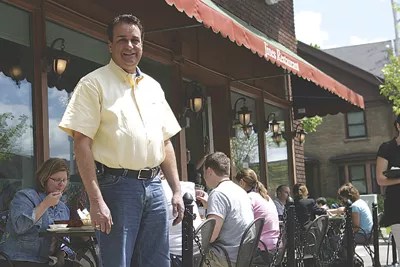
The law’s been on the books since 1936 — not that anyone
around here has followed it. Until now.
Park Avenue and other city restaurant
owners have begun placing chains, ropes, and other dividers around outdoor
seating areas to abide by the 70-year-old liquor law, which requires
restaurants to clearly define areas where they’ll serve alcoholic beverages.
And the restaurant owners say the requirement is costing them money in lost
drink sales.
Nobody even knew about the law until the State Liquor
Authority threatened to crack down on merchants earlier this spring, says Jimmy
Catalano, secretary of the Park Avenue Merchants Association and owner of
Edgerton Floral Company.
That warning was issued, he says, after an SLA
official visited the Park Avenue Festival a year ago and reported restaurants’
noncompliance.
The situation is further complicated, however, by a second
part of the law which says that drinking areas can’t intersect the public
domain. This means that public walkways can’t go through an area in which
alcoholic beverages are served. But Rochester’s
city code requires restaurants with outdoor seating to allot 5 feet of
unobstructed pedestrian space.
Some businesses can simply create a walkway along the curb.
But on Park Avenue, that walkway would be obstructed by
trees, light poles, and parking signs.
“The city,” says Peter Gines, owner of Jines Restaurant on Park
Avenue, “is redefining their parameters on where we can do tables
and where we can leave the 5 feet of space.” And that, he says, “has made a
horrible situation better.”
But Gines says he’s still taking a financial hit. He can
serve alcoholic beverages outdoors to only about half the number of patrons as
before. “We have seen a decrease in our average dinner sale per person,” says
Gines.The major sale he’s losing, he
says, are people who aren’t sure whether or not they want a drink. They do
know, however, that they want to sit outside. “They’re going to forego the $4
or $5 glass of wine or the $3 beer,” Gines says.
Restaurant owners and patrons alike are frustrated by Park
Avenue’s new cramped feel, says Catalano: “It’s been a major blow
to the neighborhood and its ambience.”
Disobeying the law wouldn’t be cheap. The penalties are
$2,500 for a first offense, a month-long liquor-license suspension for the
second, and permanent suspension for a third, says Gines.
State Liquor Authority spokesman Bill Crowley isn’t sure how
the law originated, but Catalano says there’s some evidence that it was meant
to prevent people under 21 from drinking. “Their thought process, I guess, on
this whole thing is a minor could be passing by and, like, snatch a beer or a
wine off of one of these tables,” Catalano says.
Crowley agrees
that the SLA’s post-Prohibition laws may need some
revision. But this one, he says, isn’t really that onerous. And, he adds,
changing laws takes a long time. Nor can the state grant exceptions. “We can’t
waive the law,” says Crowley.
— Sujata Gupta
THREE FOR THE SCHOOL BOARD
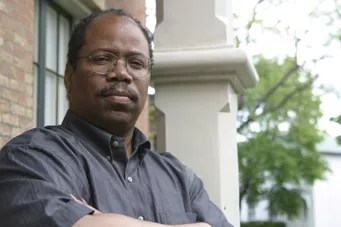
Jeff Henley, who was appointed to the Rochester School Board
just a few months ago, won the Democratic Party’s nomination to run for a full
term at the party’s convention last Thursday. But by the time the November
elections come around, he may have spent less time serving on the board than he
has campaigning to get there. And he’ll apparently face primary challenges in
September to keep his seat.
Henley, a PenfieldHigh School teacher, ran for School
Board last fall but lost. He was appointed to the board in February after
former president Darryl Porter resigned to join the Duffy administration. At
last week’s convention, Henley was in a three-way race
with civil-rights attorney Van Henri White and local financial advisor Allen
Williams. In the first ballot round, none of the candidates won 50 percent of
the votes, forcing a second round. In that one, Henley
won the nomination with 54 percent of the votes. White received 25 percent and
Williams 18.
As an incumbent, Henley has a
significant advantage. He’s already been through a lengthy, and at times
divisive, process, losing his bid for the School Board last fall and then
working successfully for appointment to the seat this winter. But White has
powerful political connections, including City Council President Lois Giess.
“I met him a number of years ago,” she said in a recent
interview. “I’ve always been impressed with him, and I think he really
understands law enforcement, school safety, and the judicial process. And I
think he would be a good addition to the School Board. He has skills we need
right now.”
White has been a harsh critic of the school district — and
has litigated against the district several times. And he says he’ll
“absolutely” challenge Henley in a Democratic primary in
September.
In an interview after the convention, White said he’s
learned a lot. A series of promising district committee meetings last month
showed he could pull 50 percent of the vote, White said, and he had expected to
win the nomination in the first round of voting at the convention. At that
point, he said, he should have rallied his supporters to stay, but most went
home after casting their first ballot.
White says school safety will be the focus of his campaign.
“Our children have to be safe, and right now they are not,” he says.
Henley, the only teacher on the School Board, says he is
particularly concerned about the district’s low graduation rate. He wants to
make board meetings more accessible to the public by getting them shown on
cable television. And he says he wants the district to emphasize the new
technologies developing in the region as a career path for students. The fuel
cell research underway in HoneoyeFalls
is an excellent teaching opportunity, he says.
Williams, who also says he plans to challenge Henley
in the September primary, says he wants to serve on the School Board because
he’s frustrated with the district’s slow progress in improving student
achievement. And as a parent of two city students, he says his experiences
dealing with the district haven’t always been positive. “A lot of parents I
talk to feel that board members are disconnected from parents, like they’re out
of touch with us,” he told convention delegates last week.
— Tim Louis Macaluso
MORE
SUMMER SOUNDS

It’s amazing that Highland Bowl doesn’t have shows more
often. The Bowl has hosted plenty of memorable concerts and plays over the
years, and yet it’s silent most of the summer. This year, though, local
promoter Jeff Springut is planning several concerts
at this beautiful venue. Springut is also booking a
free summer concert series to run Wednesdays at 5:30
at the Liberty Pole. Lineups haven’t been announced for either location, but
the online concert site Pollstar is listing two
events at the Bowl: legendary gospel-soul singer Mavis Staples and gospel
superstars Blind Boys of Alabama on July 29 and 26-year-old Italian crooner PatrizioBuanne on the 30th.
— Frank De Blase
KUHL
RUNNINGS
Last
week, Randy Kuhl ended months of speculation and
announced that he’ll seek reelection to his seat in the House of
Representatives.
The
freshman congressman made a point of making the announcement in all eight
counties in his 29th district on the same day, even though that required
managing a few flights.
The
presumptive Democratic challenger lost no time in responding. Kuhl hadn’t even finished his series of stops when Eric Massa’s campaign issued a press release.
Calling
Kuhl a “rubber stamp” for the administration, Massa seized the
opportunity to sting him, saying, “I welcome Randy Kuhl’s
decision to stand and defend his terrible record of higher tax burdens on
families and small businesses, under-funded combat troops and veterans, and the
slick WashingtonDC culture he
has embraced.”
Kuhl, who is
running on his folksy reputation, refers to himself as a “citizen legislator,”
and he has held town-hall meetings each year in each of the nearly 150 towns in
the district.
But
beyond posting a press release announcing his candidacy, Kuhl’s
campaign staff has changed little on his campaign website since he first ran
two years ago. This despite Massa’s persistent
low-level campaigning throughout the district for about a year and a half.
That
difference may be showing. Massa’s campaign
released an internal poll that showed him trailing Kuhl
by just 3 percentage points. Meanwhile, a New York Times article about the
Democrats’ hopes to make inroads in the House in the Northeast, labeled Kuhl “perhaps the most vulnerable of any incumbent.”
Then
again, this is a heavily Republican district. And once Kuhl
starts campaigning in earnest, Massa’s apparent
gains could evaporate.
—
KrestiaDeGeorge
This article appears in May 17-23, 2006.





