


UPDATE (Thursday, August 27, 6:20 p.m.): A suspect in the Genesee Street shootings is in custody.
ORIGINAL STORY:
This community is at a crossroads.
It’s not the first time we’ve reached one. But each time, we
choose the easy path, and our problems get worse. And solutions become harder.
In the late-night hours of August 19, on a major street in
southwest Rochester, we reached another crossroads. Someone drove by the Boys
and Girls Club and the Anthony Jordan Health Clinic and opened fire on a group
of young men leaving a basketball game at the youth center.
The result: three people dead, all of them young black
males. Four more people injured. And clearly, the death toll could have been
higher.
The reaction in that inner-city neighborhood has been shock,
outrage, and profound sorrow, at the loss of lives, at the callousness of the
act, at the explosion of yet another incidence of violence in an area that has
seen way too much of it.
The reaction has been similar from public officials, coupled
with pledges that the guilty will be found and punished. That justice will be
done.
That pledge is as predictable as it is necessary. But what
comes next? Now, at last, will we do what needs to be done?
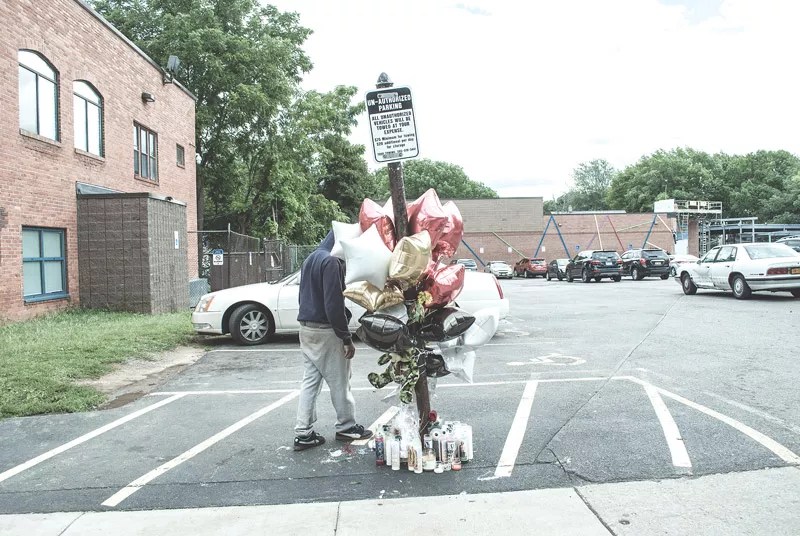
A
drive-by shooting on a major public thoroughfare in front of a youth
center and a health clinic, across the street from a school, is shocking. That
three people died and four more were injured is shocking. But to focus on the
location or the number of victims obscures the breadth of the problem, and its
seriousness. This isn’t the first time someone has paid no heed to the
possibility of innocent people being hurt. People have been struck by poorly
aimed bullets as they stood on their own porch or sat inside their own home
with young children. In 2005, a 2-year-old child was shot as he stood on the
street with his parents, waiting for a bus. Another 2-year-old was shot that
same year playing outside his house.
Two weeks ago, a gunman shot and killed a young black man in
the parking lot of the David F. Gantt Community Center in northeast Rochester.
If it hadn’t been raining, children would likely have been playing in the
nearby playground.
But it’s not only innocent bystanders who merit our concern.
So do the victims of bullets that hit their intended target – the individual
young men shot on a horrifyingly frequent basis, over drug sales, a grudge, a
previous assault.
They are all victims of a violence that has infested parts
of Rochester, as it has parts of numerous other cities throughout the country.
And it is nothing new. Every few years, it breaks out in
such a unique way that it jolts us: a 16-year-old shot and killed as he walked
home from Bible study; two teenagers pulled from their car, beaten, taunted,
and shot dead (the perpetrators ranging in age from 14 to 18). That kind of
violence dominates the news for a few days. And there are great calls to
action, emotional pledges of commitment.
And then something else grabs our attention, and we move on.
And the violence happens so often that it seems routine, not just tolerated but
expected.
Sometimes, we seem about ready to act. Back in the early
1990’s, Rochester was really
concerned about violence. Murder had followed murder. Violence had
soared – largely, it’s believed, because of the cocaine epidemic – with more
than 60 killings a year.
In 1992, the late Mayor Tom Ryan was so concerned that he
invited Deborah Prothrow-Stith, a nationally
respected expert on youth violence, to Rochester. Prothrow-Stith,
then an assistant dean at the Harvard School of Public Health, met with
representatives from city government, the Rochester school district, and
service agencies. She addressed an overflow audience at the Strong Museum.
Ryan then appointed a committee to develop strategies to
reduce the violence that had escalated in Rochester. Among other things, the
committee recommended a community effort to provide jobs for young people,
reduce the availability of guns, make health and social services more
accessible, and address the problems of income disparity and low-income
housing.
It recommended that community leaders – political, business,
religious – be heavily involved. And it recommended
that the mayor and the county executive name a task force and provide “staff,
budget, and other necessary resources” to implement its recommendations.
The county executive said no, he’d rather come up with his own
plan. And that was that.
Around the same time, the People’s Coalition of United
Church Ministries came up with recommendations of its own: mandatory courses in
non-violence in city schools; stronger efforts by religious leaders and
teachers to emphasize the sanctity of life. The UCM recommendations also went
nowhere.
And then, as the cocaine epidemic ebbed, the murder rate
dropped off. Since the low, though, it has been growing. Eliminate that peak in
the early 90’s, says RIT criminal justice professor John Klofas,
and you see a long-term trend going steadily upward. So far this year,
Rochester has had 26 murders.
This
rate of violence is not happening in Brighton.Or
Hamlin.Or Henrietta. The residents of
Pittsford Village aren’t afraid to walk their neighborhood streets. Parents in
the Village of Webster don’t lie awake nights fearing
their children will be shot as they leave a basketball game the next night.
We know why.
We know what the problem is. And we have no excuse for not
knowing how it happened. We have plenty of published research. The problem is
poverty, and its concentration in the inner-city neighborhoods of American
cities.
This is a highly segregated community, city and suburban,
poor and non-poor. Our neighborhoods are segregated. Our schools are
segregated. That is having a terrible effect, and it is no surprise that the
most severely affected people are African-Americans – and, increasingly,
Hispanics. Racism is in our DNA, and we can’t ignore the role it has played in
the growth of urban poverty.
Some of the segregation is the result of deliberate racist
policies and actions, by government, by businesses, by individuals. But some of
it isn’t, at least not directly. Highway construction, low-cost land in the
suburbs, school district borders, zoning policies requiring large lots and
large, expensive houses: those weren’t intentionally designed to force
African-Americans into poor city neighborhoods.
It’s no longer legal to bar African-Americans from certain
neighborhoods or schools because of their race. That would be de jure
segregation, segregation by law. Instead, we have de facto segregation: it just
is.
(“De facto segregation,” to use James Baldwin’s widely
quoted definition, “means that the Negro is segregated but nobody did it.”)
And in “More Than Just Race: Being Black and Poor in the
Inner City,” Harvard professor William Julius Wilson adds to the list of
government policies that are “nonracial on the surface” but that have
“indirectly contributed to crystallization of the inner-city ghetto.”
The change in the kinds of work and the skills required, the
exodus of business and retail to the suburbs (causing a loss of tax base in the
cities and a loss of easy access to those jobs), the failure of the minimum
wage to keep pace with inflation, the concentration of public housing in city
neighborhoods, scarce housing opportunities for the poor in the suburbs: all
work together to snuff out the ability of many inner-city residents to get
themselves out of poverty.
Compounding the problem: severe cutbacks
in federal funding for cities. “Just when the problems of social
dislocation in jobless neighborhoods have escalated,” Wilson wrote in his
earlier “When Work Disappears,” “the city has fewer resources with which to
address them.”
Among
the catastrophic results of all of that is the violence that broke out
on Genesee Street last week.
The attitudes and behavior of some inner-city residents,
Wilson noted in “When Work Disappears,” “ought not to be analyzed as if it were
unrelated to the broader structure of opportunities and constraints that have
evolved over time.”
“This is not to argue that individuals and groups lack the
freedom to make their own choices, engage in certain conduct, and develop
certain styles and orientations,” Wilson wrote, “but it is to say that these
decisions and actions occur within a context of constraints and opportunities
that are drastically different from those in middle-class society.”
“It is important to remember,” he wrote in “More Than Just
Race,” “that one of the effects of living in a racially segregated, poor
neighborhood is the exposure to cultural framing, habits, styles
of behavior, and particular skills that emerged from patterns of racial
exclusion….”
In his book “Race Matters,” Cornel West cited the growth of
“a pervasive spiritual impoverishment” as the poor were left behind in urban
neighborhoods. “The collapse of meaning in life – the eclipse of hope and
absence of love of self and others, the breakdown of family and neighborhood
bonds – leads to the social deracination and cultural denudement
of urban dwellers, especially children,” West wrote. “We have created rootless,
dangling people with little link to the supportive networks – family, friends,
school – that sustain some sense of purpose in life.”
“We have witnessed the collapse of the spiritual communities
that in the past helped Americans face despair, disease, and death and that
transmit through the generations dignity and decency,
excellence, and elegance,” West wrote.
“To talk about the depressing statistics of unemployment,
infant mortality, incarceration, teenage pregnancy, and violent crime is one
thing,” West wrote. “But to face up to the monumental eclipse of hope, the
unprecedented disregard for human (especially black) life and property in much
of black America is something else.”
We have known all of this for a very long time: all of these
citations are from books that are more than two decades old. Research since
then has simply added to the weight of that evidence.
What
do we have to do now? Find the person or persons who fired the shots,
obviously; try them, convict them, and send them to prison. Do what we can to
make sure there are no revenge killings. Intervene in as many new disputes as
possible. And teach non-violent behavior.
But none of that addresses the real root of the violence:
poverty and its concentration. Only if we deal with concentrated poverty will
we have any lasting impact on the violence that it has bred.
We don’t have to re-invent the wheel. We don’t have to do
our own research into what’s causing this violence. That research has already
been done, and it’s widely available.
What we need to do is act. At long last.In big ways.
It is time for systemic change. Not tweaks. Not better
coordination among services. Major, systemic change, in
several key areas.
In “Where Do We Go From Here: Chaos
or Community,” the last book he wrote before he was assassinated, Martin Luther
King Jr. singled out three of those key areas. Writing about civil-rights
progress the country had made – passage of the Voting Rights Act, for instance
– King had this warning: “The practical cost of change for the nation up to
this point has been cheap. The limited reforms have been obtained at bargain
rates. There are no expenses, and no taxes are required, for Negroes to share
lunch counters, libraries, parks, hotels and other facilities with whites.”
“The real cost lies ahead,” King wrote, in quality
education, job creation, adequate housing.
As King said, true reforms in those three areas won’t be easy,
cheap, or politically palatable. It won’t be enough to provide adequate
housing, for instance, if we locate all of it in high-poverty, stressed-out
neighborhoods. Nor will it be enough if we address housing alone.
To help the poor get out of poverty, and to break the cycle
of poverty that has affected generations of Rochesterians,
we will have to provide jobs. And job training. There will have to be jobs that
pay decent wages – and those jobs can’t require college degrees or high
technical skill.
And to make sure that future generations can get better jobs
and join the middle class, we will have to, at last, reform education.
School administrators have to have a “missionary zeal” aimed
at “the rapid improvement of the school performance of Negroes and other poor
children.”
“If this does not happen,” said King, “America will suffer
for decades to come.”
And he also said this: “Quality education for all is most
likely to come through educational parks which bring together in one place all
the students of a large area.” His proposal: parks where superior teachers,
specialists, and facilities would attract students from throughout a region.
That, he said, “will guarantee school integration even before housing is
desegregated.”
Rochester has actually considered such a park system. In the
late 1960’s, the late Herman Goldberg, then superintendent of Rochester
schools, proposed a parks configuration for Rochester, I assume with an
interest spurred by King.
The idea went nowhere, but an iteration of it – a single metropolitan
school drawing both city and suburban students – has been in the planning
stages for several years. It still hasn’t moved into physical reality.
That doesn’t mean that nothing’s happening. The year-old
intensive local effort Great Schools For All is
preparing what it says will be a comprehensive proposal for a voluntary system
of integrated schools serving city and suburban students, poor and non-poor. That
report is due out in October.
If the members of Great Schools For
All come up with a workable plan, and I think they will, it will still be just
a plan. Having the community embrace it and put it into effect will be the
tough part, as I’m sure Great Schools leaders know. And in that area, Rochester
has an abysmal record.
To
eradicate the violence that is plaguing Rochester’s inner-city
neighborhoods and ending the lives of young African-American males, we have to
end the cycle of poverty. We cannot do that on the cheap. We cannot do it
without facing and overcoming strong, widespread resistance, misunderstanding,
fear, and suspicion. We cannot do it without the broad participation and
commitment of community representatives.
We cannot do it without a commitment to stick with the
effort over a long time. Rochester’s poverty, and its concentration, didn’t
happen overnight, and it can’t be eradicated overnight.
And we cannot do it without the leadership of elected
officials, business leaders, institutional and educational leaders,
neighborhood leaders, religious leaders: city and suburban, Republican and
Democrat, black, Hispanic, white.
Leadership, commitment, and good intentions exist in
Rochester in abundance. The question now is whether the late-night shooting on
Genesee Street will, at last, result in what has been lacking for decades: the will
to act.
Since the Genesee Street shootings, there have been eloquent
calls by AfricanAmericans for the black community to acknowledge the cancer in
its midst and do something about it. Where, asked an emotional 51-year-old
black neighborhood resident who interrupted a Lovely Warren press conference, is the black community’s outrage over
black-on-black violence? If it had been a white police officer who fired the
gun outside the Boys and Girls Club, he said, there would have been protests in
the street.
He’s right, of course. And the outrage and community action
he called for are needed. But that will not address the poverty that has bred
this violence. And his plea cannot be used by the larger community as an excuse
to turn away and go back to business as usual.
It will not be easy to eradicate the violence that is
wracking Rochester’s inner-city neighborhoods. But it will be impossible to
eradicate it if we don’t act together as one regional community.
The mayor can help lead on this effort. But she can’t do it
by herself. Rochester police can’t do it by themselves. It is not a city
problem. It is a community problem. We created it. And we must solve it.
Getting all of us to accept our responsibility may be one of
the biggest hurdles. But this community faces no bigger challenge: no bigger
threat to young lives, no bigger threat to the region’s economic growth. And at
heart, facing that challenge and meeting it is a moral responsibility.
“I’m not interested in anybody’s guilt,” James Baldwin wrote
in “Words of a Native Son.” “Guilt is a luxury we can no longer afford. I know
you didn’t do it, and I didn’t do it either, but I am responsible for it
because I am a man and a citizen of this country, and you are responsible for
it, for the very same reason.”
Related Stories

This article appears in Aug 26 – Sep 1, 2015.






The “segregation” is VOLUNTARY, NOT imposed! People of all skin colors get fed up with intimidation and violence and move and the rest get left behind – just like pouring off water in a bucket and the mud is left.
The “bad” neighborhoods were good before, but houses get rented and the most renters trash them (tearing screens, breaking windows, tearing down blinds and curtains, stealing pipes, damaging walls, breaking porch railings and more). Outside they drop trash and don’t pick it up, don’t mow lawns, don’t pull weeds, don’t plant flowers, don’t clip bushes, fight in the streets, allow drugs to be dealt and don’t do anything about it, and play music that glorifies violence/abuse/misogyny/drug dealing and more. You fill your mind with crap and what do you expect??
But no one wants to put blame where it belongs. Certain people are so riddled with unjustified guilt about their color or upbringing that they won’t say it like it is. You feel so bad? Then YOU sell everything, give it to whoever you think you can help, and move into these neighborhoods and see it for what it IS, not what you IMAGINE it is.
Poverty DOES NOT cause this or we never would have made it out of the Great Depression. It is poverty of the mind and the soul and the willingness to let the crab bucket pull you down.
In “good” neighborhoods, that s**t isn’t tolerated and people (including renters) take pride in where they live and call the cops when stuff looks sketchy instead of letting it slide.
I am urban by choice and POOR and have watched this for 30 years and I don’t live in some ivory tower suburban neighborhood and I HAVE HAD IT WITH THE EXCUSES.
It’s SIN, plain and simple. People are NOT basically good and only God can help us now, but the clergy are too busy living high off the hog, posturing for the people and praying to the cameras to do their job.
Wow,…I can’t address all of the content on this, “NOW WILL WE ACT”? writing. It will take a response that might even come in volumes. So I’ll bite off this much for now. You stated that Dr. King noted three areas that needed to be addressed, QUALITY EDUCATION, JOB CREATION and ADEQUATE HOUSING. You know what, he got that in the right order too.
QUALITY EDUCATION. We are at the very bottom of just about every list pertaining to education with one exception, dollars spent per pupil, where we are among the top. The education “system”, the RCSD is a mess, period. Starting with the RCSB on down, it has failed to provide relevant education, period. The teachers union under the “leadership” of Adam Urbanski, a disaster. When it comes to education we have the worst of the worst. I have personally worked for over three years to introduce an educational enhancement, which has fallen on deaf ears. Years of trying to get the opportunity to present, with little response. The RCSD & the RCSB knows it all. They don’t even want to hear it. Many are there to ride out their profession and retire to the beach. Fat retirements with nothing to show for it but an educational system in CRISIS!
JOB CREATION. You can’t “create” jobs! You need education and no it doesn’t have to be a college degree. It DOES, however, need to be some kind of training in some field. If you don’t know how to handle a tool or machinery or a computer, you are NOT marketable and you cannot expect a living wage job. Period! We had an Edison Tech that taught that and did it very well,….but we destroyed it!
ADEQUATE HOUSING. That lines up right behind the education and the job opportunity that comes as a result of education.
School,…. you have to attend!! You have to have butts in seats,…. and a relevant education system that provides the opportunity for a clear pathway to a career/profession. You don’t do that by boring them to death, you do that with showing them what is available to them, live, in a facility that allows them to actually see the what, where and how. You have to inject some. wow, this is cool, into the education effort or else you get what you have, miserable failure.
I could address some addition items that were presented,…but I don’t want to take up all the space. I will say this, stop pointing the finger at anyone and everyone outside the city. It’s not the entire suburb that has failed nor created, exclusively, the urban poverty. By the way how is this, “we are going to solve this poverty once and for all” thing set forth by Joe Morelle, working out? Lots of hot air, lots of meetings, lots of people in high places getting nothing done. Yup, we have a director and staff and we have blown $400,000.00 on the effort. Results?
“You Stupid Fool” Official Video. https://youtu.be/LNArp0cgsX0
“We know what the problem is”
I can’t believe I read this whole article just to read for the umpteenth time that it is the suburbanites fault. We need to move back into these very dangerous neighborhoods. We need to give MORE than the 50% taxes we’re paying now. The same old tired excuses and actually part of the CAUSE of the problems.
Why do you in the press feel you are helping by adding to the anger and frustration of our friends in the city by assigning blame to someone ELSE?
The only way out of poverty and all the problems that come along with it is to take responsibility YOURSELF. Reject racist programs like affirmative action, and others that ENCOURAGE dependency. Stop listening and reading the leftist media. Stop listening to and voting for leftist politicians.
Thankfully a lot of blacks are seeing the light and moving to the right side of the isle. You know, the party of MLK. The party that ENDED slavery?
“This is a highly segregated community”
Oh boy, here we go again…. The city is the LEAST “segregated” part of Monroe county, yet has the highest crime rate. And “segregation” is the problem? The last census count I looked at had blacks and whites (which includes Hispanics) listed at nearly the same % of the population, yet thinking back on the homicides I’ve seen within city limits this year, only 2 have been committed by whites (who are actually Hispanic).
Poverty isn’t the issue. We all know what the issue is, but white people can’t say what the issue is, because we get labeled “racist” when we do. Instead, I’ll refer anyone to read Rev Lewis Stewart’s words on the Genesee St shooting.
“We demonstrate and get upset when a cop takes a black life and say all black lives matter,” said Rev. Lewis Stewart, the president of the United Christian Leadership Ministry. “But where is the anger? Where is the outrage when innocent black lives are taken by vicious killers? That’s the issue for me.” Stewart says putting an end to violence is going to take more than prayer. “I think we have a morality problem in our community among young blacks,” he said. “I think that the black churches need to come from behind their walls, and not just Clergy on Patrol, but come out in mass and talk to a lot of young people.”
Marcene Lloyd, you are 100% on target! Your words ring so true.
It’s the writings of those people like Mary Anna Towler that mislead the public by their clueless, myopic opinion that poverty or concentrated poverty is the cause of all this violence. They can back it up with data and studies from “Ivory Tower” professors who have not experienced what really goes on in the urban environment , such as the thug culture, so they can only intellectualize and write about. it.
They distract the public from the truth, because of their lofty and somewhat ignorant perceptions; and, unfortunately that does not contribute to solving the violence issue.
Funny how you can see “dislikes” but no logical reasons or cogent arguments. All emotion, no brain from the emotional ivory tower or those who benefit from crying “I’m a victim.”
Great piece, Towler.
Oh my. So many of you commenters think that the problem is not poverty, but some force that you are too ashamed to name. Why can’t you say what you mean? You think the problem is related to skin color. Do you have any idea how ignorant that is? Lighter skin equals good. Dark skin equals bad. Until you can admit that this is how you make your considered opinions, we will get no where.
In a way, I thank gawd for Donald Trump and the issue over the Confederate flag. It makes it so much easier to pinpoint racism.
The problem isn’t the concentration of poverty in the inner city, it’s the concentration of stupidity in the inner city. Poverty is a RESULT of poor decision making – dropping out of school, getting pregnant before getting married, failing to hold down a job, deciding to defy order and laws instead of obeying both, etc. People get “left behind” because people that are responsible and productive don’t want to have anything to do with people that believe and act in the opposite way. Who would want their peaceful neighborhood to turn into a gang banger haven? People that are fleeing from the city including a large and growing number of middle income blacks (Henrietta has a growing middle income black population) are acting in their self interest and you cannot blame them for making choices that are prudent for them. Nothing will change unless and until people causing the problem take responsibility for their own actions and their own situations.
I will be signing off from contributing to this publication. Thank you for reading and commenting on my views. Semper Fi, Dutch.
Dutch, please don’t stop contributing. It does seem like a recent post of yours got deleted for no good reason (that I could see), so I can understand your frustration. But please hang in.
Animule is dead on – the stupidity is what is ruling inner city blacks and hispanics these days. The glorification of the thug culture – the “Stop Snitchin” culture are all leading to the issues we see today. If one person stood up and said this is the gang banger who pulled the trigger as soon as it happened alot of wanna be gang bangers would think differently – “Oh No! I going to get caught if I do this!”
Sheesh people – even the inner city blacks are leaving in droves – my neighborhood alone has seen in influx of blacks and ya know what? They are better neighbors than the folks who sold their houses!! Why??? Cause the know the escaped, they are thankful and they are decent people. They couldn’t be decent people in their old neighborhoods due to the Stop Snitchin idiots!!! They had to keep their heads low and plan their escape.
As a landlord I see this daily – the lazy good for nothing gang bangers walking around like they own the place. The world owes them – they owe nothing. It all trickles down, the children learn from the pseudo children who are their parents. Personal responsibility folks – it will take you a LONG way.
Thanks Kathryn for proving my exact point that white people can’t say what the problem is without being called racist. So again I’ll post what Rev Stewart, who is well known to go to the “blacks are victims” card, said:
“I think we have a morality problem in our community among young blacks,”
and again:
“”I think we have a morality problem in our community among young blacks,”
and a 3rd time in case the first two haven’t settled in:
“I think we have a morality problem in our community among young blacks,”
I’m a white person who lived in Brighton until 1992, and heard the Town “leadership,” more than once, justify keeping its distance from problems in the City.
Also sadly, I went to meetings at a black City church where a majority non white membership politely allowed me to be present, but cautioned me strongly to watch my step and not interfere. I stopped going.
Since 1992 we have lived in the City ourselves. I do fear being outside at midnight, and now I recognize it is time to fear being on the street at any time, ever.
Yet, I am ready to attend meetings and be involved…provided I am welcomed as an equal with others, that is.
I’ve helped my landlord with his section 8 apartments for over 9 years. The tenants are pretty rough on them.
Although there are many targets of blame for such damaging behavior, I really think intelligent people with too much time on their hands are subjecting themselves to too many vices. The apartments usually end up resembling bombed-out sheIls with most of their belongings left behind.
I urge our anti-poverty people to be present at apartments just vacated by tenants. Experience it for yourself. Trust me, it’s worse than how you’ve imagined it.
There is not a single mention of gangs in this story. The Genesee street shootings and many other acts of violence happening in the city are gang-related: gang members shooting each other and innocent bystanders. One person arrested and charged in the Genesee street incident was shooting back at the shooters. Your average law-biding citizen does not do this (even the police wouldn’t do what he did). The mayor has begged that there be no ‘retaliation’ for the shootings. Who was the mayor talking to if not gang members? Two of those shot had criminal and weapons records. So don’t say “We know why” and “We know what needs to be done” if you don’t mention gangs and address that as the primary cause. There needs to be a major crackdown on GANGS to stop the violence long enough to address other problems.
Look around the city. It’s a mess in some of these neighborhoods. Obviously the people who live in these neighborhoods have a pretty low feeling about themselves. How do you expect them to give a damn about someone else? They need POSITIVE ideas around themselves and I’m not seeing it. Not from Lovely, and certainty not from Obama.
But back to Rochester. I’m convinced that there’s nothing you can do without a good attitude. It comes even before education. So why don’t we bring in someone like Les Brown to give free talks for a few days and come back regularly.
It’s almost like the left doesn’t really want to solve the problem, but always be the one with the hope and change, so of course you must vote for us. How much longer are the citizens of Rochester going to fall for these Charlatans?
It is no surprise, yet still disappointing and discouraging, to see how much of the reaction from far too many people results in blaming OTHER people who are poor, lacking good jobs or any work at all, deficient in education, decent housing…
Mentioned, and considered, and examined all too seldom is The System, and the terrible history which is out there (recognizing that some try to hide it AND to hide their heads in the sand) to verify what it means when people with money and power do whatever is necessary to keep all they have, while making more, strictly for themselves. Maybe the donation of a few dollars now and then, but let’s be reasonable. “These people WANT us to take care of them!”
Our greed and selfishness and determination not to face OURSELVES…altogether this combo is more than sufficient to kill us if we don’t watch out.
A variation on the Pogo quote: the enemy is us.
Most of us do take responsibility for OURSELVES. Why should we not, and you too, expect others to take responsibility for THEMSELVES as well? It’s not hate, anger, finger pointing or racist. We just want the best for EVERYONE. What is wrong about that?
The fact that we waste millions on things like the ill conceived fast ferry sends a loud and clear message. The fact that the county keeps upgrading the Seneca Park animal prison sends the same message. Some thought, and still do think, a downtown casino would be the answer to Rochester’s problems. Renaissance Square was supposed to be a downtown savior. A downtown Paetec office tower was supposed to spur new restaurants and businesses in the city.
The message sent by all these projects is a throwback to Ronald Reagan: trickle down. Throw away millions upons millions at the top and low wage jobs will follow. None of the above have done anything for Rochester or the area, least of which the people who deal with poverty and gun violence every minute of every day.
The poverty and violence in Rochester boils up from the bottom, so money spent at the top has little chance to trickle down far enough to even begin to make a difference. All the projects and ideas above are merely windown dressing. They are an attempt to hide Rochester’s problems and make some people feel as if they are doing something good.
Every time we hear a mention of a new performing arts center or more spending at the zoo, let’s change our thinking to the most basic needs of people. If we have any funds to spend, the focus should always be restoring jobs and dignity for people in the city.
People matter… The fast ferry did not matter. The zoo does not matter. Renaissance Square did not matter.
Now will we act?
Of course not. There are vested interests and abiding sentiments which will leave the current state of the world in place.
Peak to trough, the homicide rate in New York City saw an 87% decline over a period of 23 years. If you took the median of the span of years around the 1990 peak and up to the trough in 2013, its not quite so pronounced. The homicide rate in NYC was bouncing around a set point of 27 per 100,000 ca. 1990 and around a set point of 5 per 100,000 20-odd years later, or an 81% decline.
Peak to trough (1993 to the present), the homicide rate in Rochester has declined by only 30%. However, the 1993 peak was an outlier. A rate of 20 per 100,000 was about the median ca. 1990 and a rate of 20 per 100,000 is the rate today. There has been no progress against this most salient form of violent crime in Rochester.
Just as an aside, it’s difficult believe that Mayor Ryan thought bringing Deborah Prothrow-$tith’s annoying medicine show to Rochester was anything but a diversion to get the newspapers off his case with the unfortunate side effect of more ca$h for that clunker. Her sanctimonious tripe was repellent at the time and it required little insight to conclude it was all a wheel-spinning exercise.
James Q Wilson, William Bratton, and Rudolph Giuliani gave you a demonstration of what needed to be done and it could be seen as early as 1997 that their methods were having an effect and they’ve had an effect in circumstances as challenging as East Orange, NJ. Rochester’s political class is just not interested in making the best of their human resources and hell will freeze over before M Brooks, the lady with 1001 accounting gimmicks marketed with shizzy acronyms, would ever consent to promote the formation of a metropolitan police force from the Sheriff’s department and the six municipal police forces operating in the dense settlement in and around Rochester. Too many irate householders in Greece irritated that a penny of their tax money might go toward public order maintenance on Genesee Street. It’s a 12 minute drive from their house, so quite obviously on the other side of the moon.
Quite wringing your hands and quite running on too long. You need an ample supply of cops, and you need a police force that is encouraged to be vigorous and proactive and can do its work with elan and high morale.
“I can’t believe I read this whole article just to read for the umpteenth time that it is the suburbanites fault.”
It is not your fault, Mr. Johnny, but you might help with the solution. One aspect of the solution would be a metropolitan police force. Suburban voters could assist by consenting to that.
“Most of us do take responsibility for OURSELVES. Why should we not, and you too, expect others to take responsibility for THEMSELVES as well? It’s not hate, anger, finger pointing or racist. We just want the best for EVERYONE. What is wrong about that?”
Unlike primary and secondary schooling, order maintaeance is a public good. Are you really advocating abolition of the police and their replacement with private armies? If you’re not, then the question arises of what’s the optimum level of aggregation of police services, what’s the optimum expenditure, and what’s the optimum deployment. The dense settlement around Rochester comprehends 80% of the population of the County of Monroe and has a population of about 600,000. That’s the real, physical city, currently cut up into 14 municipalities with seven police forces between them. I do not doubt that devolution of some services is adequate and perhaps optimal. It’s very difficult to believe that applies to policing or to child-protective and foster care given the jagged disjunction betwen marginal utility of the services in question and the tax base over the tapestry of the community. By convention, the county takes care of child protective. Why not a police district for the central metropolitan settlement and a unified police force therein?
One thing I’ll object to is the notion that segregation is severe or that it’s a social problem per se. Fully a third of the black population in the Genesee Valley lives nestled in and among the general population in small concentrations. About half the blacks in the Genesee Valley live in census block groups wherein the black share exceeds 47% and about half in block groups wherein the share is less than 47%. It is modal nowadays for blacks to live in neighborhoods where non-blacks are a slight majority. Only 13% of the blacks in the Genesee Valley are living in block groups which are more than 80% black. What we have is concentration, not segregation.
Concentration is not pathological. Even mild prefereces over who you’d prefer to have as a neighbor will induce concentration on this level and then some. You have those preferences for a variety of reasons, but modest differences in manners and social signals will suffice. More integration should not be a priority. Better quality of life in black neighborhoods (really, polyglot neighborhoods where blacks have a plurality) should be the priority and the order of the day.
“Poverty isn’t the issue. We all know what the issue is, but white people can’t say what the issue is, because we get labeled “racist” when we do. Instead, I’ll refer anyone to read Rev Lewis Stewart’s words on the Genesee St shooting.”
The issue is demoralized police forces, understaffed police forces, and consequent lax law enforcement. That’s the issue. No need to delve into pop anthropology. You go to war with the army you have, you dwell with the people that chance and circumstance have placed you with due to your country’s history, your community’s history, and your family’s history. You can complain that Rochester will never be Switzerland because of our polyglot population. So what? It can be better than it is. And those trafficking in pop anthropology might explain to us why the homicide rate in Martinique is one-fifteenth that in Jamaica. The critic Mark Steyn put it thus: if you want to know why Haiti is Haiti and Barbados is Barbados, biology doesn’t get you very far.
“”I think we have a morality problem in our community among young blacks,” he said. “I think that the black churches need to come from behind their walls, and not just Clergy on Patrol, but come out in mass and talk to a lot of young people.””
Better morals is all very well and good, as would be better manners. Can we enforce the law please? That’s what we pay civil servants to do (among other things).
“Oh my. So many of you commenters think that the problem is not poverty, but some force that you are too ashamed to name. Why can’t you say what you mean? You think the problem is related to skin color. Do you have any idea how ignorant that is? Lighter skin equals good. Dark skin equals bad. Until you can admit that this is how you make your considered opinions, we will get no where.”
Get nowhere with what? With abasing ourselves in front of you?? The ultimate source of our trouble is original sin. That has signature expressions in time and place, of course, but we’re all too far from God and all too close to our passions. The most troublesome passions in this case are those of feral young men. That’s why we have police.
” Certain people are so riddled with unjustified guilt about their color or upbringing that they won’t say it like it is.”
I’ll offer the suggestion that guilt is seldom their problem. An impulse toward self-aggrandizement is the problem and it’s manifest in striking moral poses. When they’re done patting themselves on the back, they might lend a word of support to those whose job it is to maintain order and see to it that crime is punished. That goes for Mrs. Towler, that goes for householders in Greece fussing about their property taxes.
“I’ve helped my landlord with his section 8 apartments for over 9 years. The tenants are pretty rough on them. “
1. Quit subsidizing any sort of expenditure which is sensitive to considerations of taste and amenity and is used for services or goods frequently replenished. That goes for housing subsidies, grocery subsidies, utility subsidies. Replace these programs with a negative income tax.
2. Amend New York law on evictions and foreclosures. I’ve friends who’ve been in the real estate business in California who’ve told me that foreclosures (at any rate) are a procedure nightmare. Landlords have an interest in enforcing behavioral standards and should be allowed to go to work. Most bad tenants will get the message.
Foreclosure in New York as opposed to California, I mean. Section 8 also complicate the protocol for evicting a tenant.
http://www.rbj.net/article.asp?aID=213353
Wow…great discussion. I think the tone leans heavily towards personal responsibility, which I agree with. My dad quit high school in the 10th grade. He worked hard all his life and ended up with three homes and well off. He dug himself out of poverty. The farm house he grew up in was appraised at $7,000 when it was donated to the church so I think he bettered himself. I find it hard to believe Mary Anna is that stupid to believe what she wrote. I think her goal was to stir the pot. If she does have convictions for what she wrote, she needs to lead by example. Sell your house in the Park Ave area, and move to Genesee street. I see the problem as lack of respect for life. In past generations, family was important and parents taught their kids strong social values. I was raised to respect my parents, my teachers, and police officers. The real root of the problem is children born into poverty because people are too stupid to realize you get an education, a job, then start a family. So, if you need to take your frustration out on someone, attack your parents, not an innocent person that had nothing to do with bringing you into this world! Animals procreate without thought of consequences. And don’t preach the “no jobs out there” excuse when I see lots of signs and ads in the D&C. Tell that to those that lived through the Depression. Some people are just lazy.
I agree with Mitch on the concept of personal responsibility…as long as it applied to government and elected official too.. Given a certain amount of money, as I mentioned before, elected officials opt for window dressing such as fast ferries and huge flashy building projects. If elected officials were being personally responsible with their job of serving people, the money would always go to where it is most needed and would do actual good.
The problem, as usual, is IGNORANCE. Not on the part of the City people, but on the part of their “country (i.e., suburban) cousins”. The City people understand all too well that the residents of the middle class suburbs fled the City precisely to give their own precious kids all the advantages they could not get in the City: great schools, playing fields, school trips, cul de sac neighborhoods (isolated even from each other)..and so on.
LEFT BEHIND means just that. And will continue to mean the bottom of the barrel, until the entire community can summon the WILL TO ACT.
Rochester the City got left behind even during the WAR ON POVERTY in the 1960’s because of ignorance, smugness, superiority and mean spiritedness toward the poor–and especially toward those among the working poor who were Afro-Americans and/or member of LABOR UNIONS. That is when the CITY-GHETTO was formed. Urban Development knocked down neighborhoods that were communities. The people scattered. We are reaping what we sowed.
But until we can say, “We did this”, we cannot become reconciled. We cannot go on. We cannot rebuild. Reparation must be given. But we cannot give. We can only remain smug.
So nothing has changed. The middle class still looks down its nose from its ever expanding suburban perch. But now the suburban sprawl has doubled or tripled, and though property taxes are astronomical in Victor-Mendon-Pittsford, those whose children on on track for Harvard and Stanford can pat themselves on the back and say,”its worth every penny of it: life is good;the schools are excellent”.
And IGNORANCE floats to the top of the barrel.
What will it take to change the hearts and minds and wills of the ignorant?
More deaths of innocent people?
“How many deaths will it take till we know that too many people have died?”
Too bad we’re not there yet. It should have been long ago, but for our IGNORANCE.
But thanks. CITY NEWSPAPER for a great analysis.
Why do we talk about the people in these neighborhoods as if they are stupid and can not see how their lives are? We talk about how ‘we’ need to do something. “We” do studies and ‘we’ do programs and ‘we’ rant and rave about the poor unfortunate inner city black person like we are somehow better than they are. We act like their keepers. We tell them with our very desire to help them that they can not help themselves, that they are not equal, that they are not able. That they are in need of being taken care of. We give them money to stay right where they are. I love the man who shouted out to the Mayor about there needing to be outrage in the back community about black young men killing black young men because until that happens nothing will change. Until they hold their young men to the standards of a civilized society, until they say no more, until they change their culture from the inside and want better for their children, until they call for social change from their families, nothing will change. And ‘We’ should stop acting like their keepers who know what is best for them and holding them to a lower standard as if they are not able to keep up.
I find Towler’s call for schools with an urban/suburban/rural draw, and “superior teachers, facilities, and specialists” meant to “bring together in one place…students of a large area,” interesting. That idea , floated in the late 1960’s, did not actually go “nowhere”; it was the basis for the foundation of World of Inquiry Elementary School, which families clamored to get into, and which (now a K-12 school) is still a gem of the City School district. In the ensuing decades, however, access for students from outside the district was dropped for political and funding reasons. The exemplar is right in front of our noses, but we need to find out what happened to the broad geographic, socioeconomic, and cultural mix portion of a successful formula for that school, so that we can keep from running into the same barriers.
Another mass shooting in the city last night/this morning. If only “ignorant” suburbanites had acted, right Diana Seagreen???
Eric, it’s a shame that you feel any discussion of racism is a personal attack. Perhaps if you took a long view, you might understand what is going on.
I know what’s going on. 4 mass shootings (Gates pub, Lewis St, Genesee St, Woodward St) in less than 5 months, killing 6 and injuring 18 in our area. But it’s a white problem? It’s a suburban problem? It’s racism? It’s poverty? To paraphrase Stewart again, there’s a morality problem in the black culture. When you’re 13% of the population but make up more than 50% of the murder arrests, you have no one to blame but your culture.